
In today’s digital age, the term Bank Statement Generator has gained significant attention, often raising eyebrows in financial and legal communities. A bank statement generator is a software tool or online application that creates imitation or mock bank statements. While the term might sound straightforward, the use, legality, and implications surrounding such generators are more complex than they initially appear. These tools are commonly searched for by individuals or businesses looking to simulate financial documents for a variety of reasons—some benign and others potentially fraudulent.
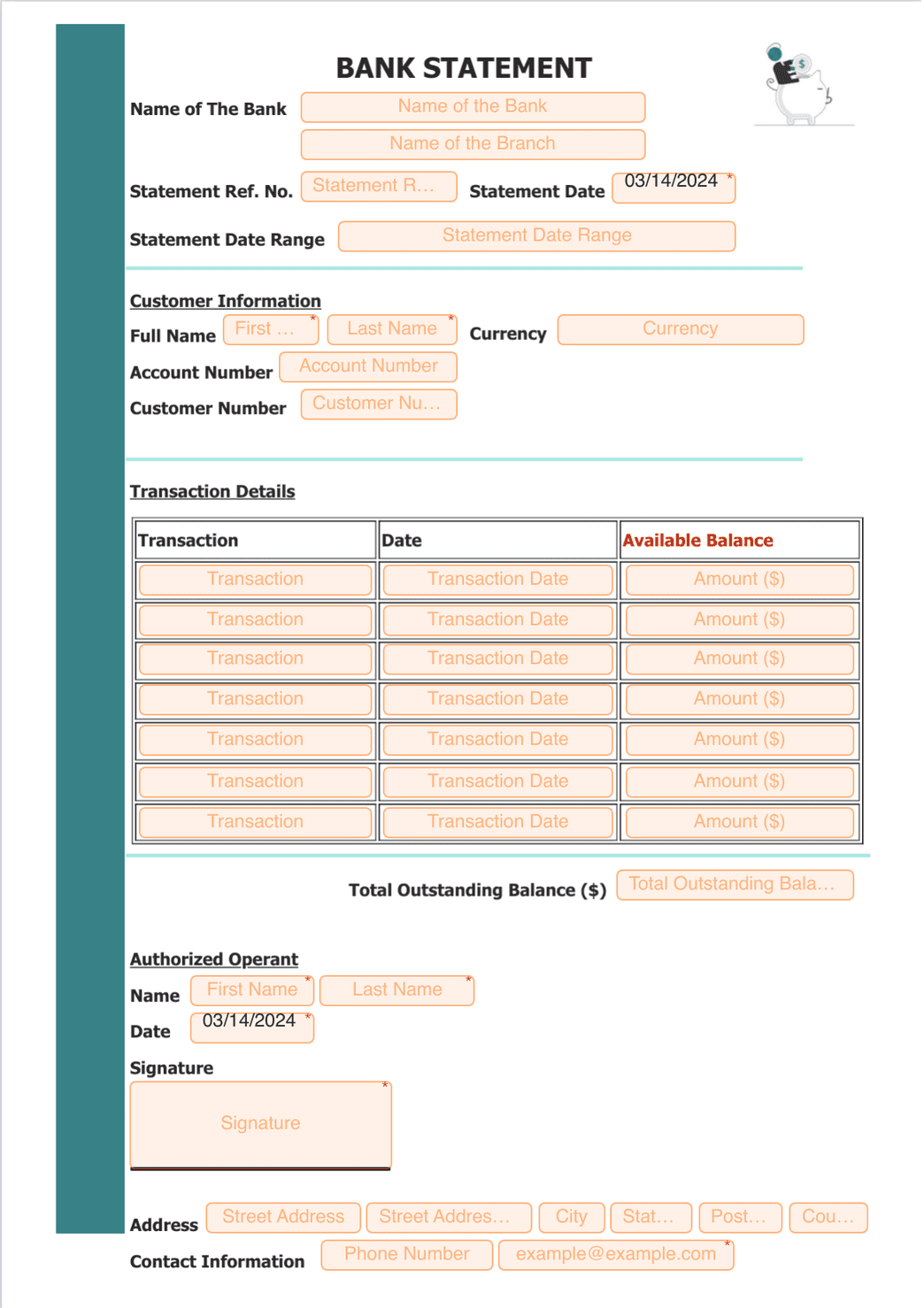
Primarily, a bank statement generator can be used for legitimate purposes, such as creating sample financial documents for educational purposes, business presentations, or software testing. For instance, financial institutions or fintech developers might use mock data to test the functionality of apps or to train employees without exposing real client information. Similarly, students or educators may use generated bank statements to simulate real-world financial scenarios in classroom environments.
However, concerns arise when these generators are used with dishonest intent. Unfortunately, some individuals may use a bank statement generator to manipulate financial data in order to mislead landlords, lenders, or other entities. This kind of usage crosses ethical and legal boundaries, potentially constituting fraud. For example, submitting a falsified bank statement to secure a loan, rent an apartment, or obtain credit can result in severe consequences including legal action, criminal charges, and long-term damage to one’s financial credibility.
The legality of using a bank statement generator depends largely on the intent behind its use. While creating fake documents for personal records or fictional scenarios isn’t inherently illegal, using them to deceive others is a different matter entirely. Financial institutions and government bodies take document forgery seriously, and digital forensics can often trace the use of these tools back to their source. Therefore, users must be aware that generating a fake bank statement for real-world use, especially if it involves misrepresentation or fraud, is a punishable offense under most jurisdictions.
Moreover, the availability of such tools online has led to increased scrutiny. Some websites offer downloadable templates or customizable features that closely mimic authentic bank documents, making it challenging for non-professionals to identify counterfeits. This has prompted many banks to implement more robust verification processes and digital security measures to detect altered or fabricated documents.
In conclusion, while a bank statement generator may appear to be a harmless or even helpful tool in certain contexts, it carries substantial risks and ethical implications when misused. Users must distinguish between lawful, constructive applications and deceptive practices. With digital transparency and accountability becoming more critical in financial dealings, the safest path remains honesty and integrity. Misusing such tools not only undermines trust but can also lead to serious legal repercussions that far outweigh any perceived short-term benefit.